







No. You cannot go to jail for failing to pay a title loan. Title loan debt is a civil matter, not a criminal one.
Because title loans are usually used for short-term needs, including emergencies, missing payments can add more financial stress.
In most cases, the main result of default is vehicle repossession, not arrest. Arrest would generally involve a separate legal issue, such as selling or hiding the vehicle without the lender’s permission or failing to follow a court order.
If you’ve missed payments, you may be worried about what happens next. Knowing your options can help you decide what to do.
This guide explains what actually happens when you default on a title loan, what debt collectors can and cannot legally say, and the limited situations where criminal charges or contempt of court could apply.
Key Takeaways
- The primary consequence of defaulting on a title loan is repossession. Your lender may repossess and sell your vehicle, and you could still owe a remaining balance.
- Covered debt collectors generally cannot threaten you with arrest or jail over an unpaid title loan under the Fair Debt Collection Practices Act (FDCPA).
- Criminal charges may apply only in limited situations, such as fraud involving the collateral vehicle or failing to comply with certain court orders.
- If you’re struggling to make payments, contact your lender as soon as possible to discuss available repayment options.
Why Can’t You Go to Jail for Not Paying a Title Loan?
Debtor’s prisons were abolished in the United States in the 1830s. Whether the debt is a credit card balance, a medical bill, or a title loan, the law treats them the same way. You cannot be locked up for it.
The fact that a title loan is secured by your vehicle doesn’t change this rule. It simply gives the lender the right to repossess the collateral if you default, rather than pursue criminal charges for missed payments.
When Could Not Paying a Title Loan Actually Lead to Criminal Charges?
Simply missing payments on a title loan is not a crime. Criminal charges generally arise only when someone engages in fraudulent or illegal conduct beyond non-payment.
Selling or Hiding the Vehicle
While a title loan is active, the lender has a security interest in your vehicle. You should not:
- Sell the vehicle without the lender’s consent.
- Give the vehicle away.
- Hide or intentionally conceal the vehicle from the lender.
- Destroy or intentionally damage the vehicle to prevent repossession.
Depending on state law, these actions may be treated as fraud, theft, or another criminal offense because they interfere with the lender’s legal rights to the collateral.
Providing False Information
Criminal liability may also arise if you intentionally provide false information when applying for the loan, such as:
- Misrepresenting your income.
- Claiming ownership of a vehicle you do not legally own.
- Providing other materially false information on the application.
These situations involve alleged fraud, not the inability to repay a loan.
Can You Be Arrested for Ignoring a Lawsuit Over Unpaid Title Loan Debt?
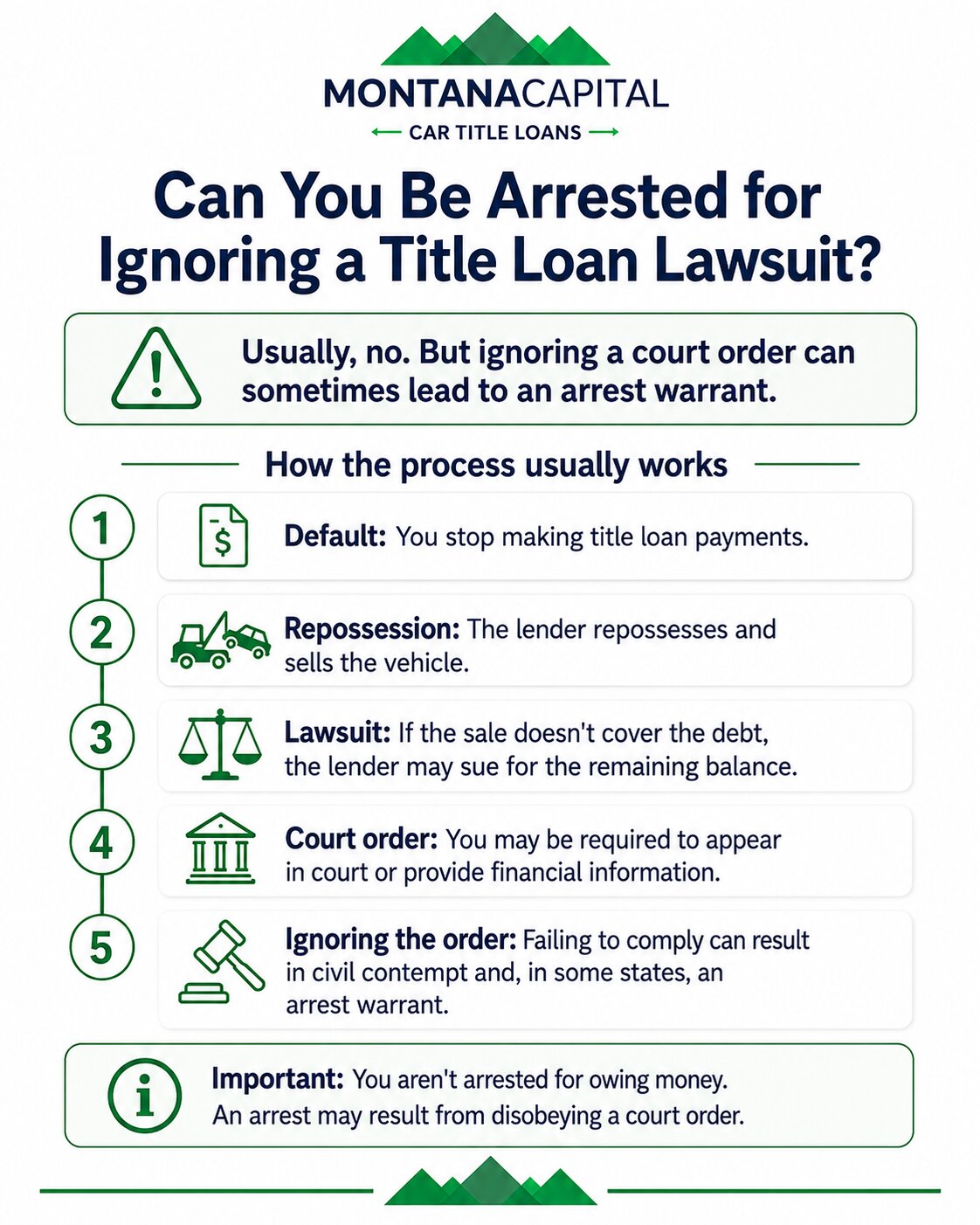
In rare cases, ignoring a court order related to the debt can lead to an arrest warrant.
Typically, the process looks like this:
- You default on the title loan.
- The lender repossesses and sells the vehicle.
- If the sale doesn’t cover the full balance, the lender may sue you for the remaining amount.
- The court issues an order, such as requiring you to appear for a debtor’s examination.
- If you ignore that court order, the judge may hold you in civil contempt. In some states, this can result in an arrest warrant.
The key distinction is that at this point, you are not being arrested for owing money. You are being held accountable for disobeying a court order.
What Actually Happens If You Default on a Title Loan?
Your Vehicle May Be Repossessed
Depending on your loan agreement and your state’s requirements, we may be entitled to repossess after a missed payment following applicable notice procedures. The process varies by state and the terms of your loan agreement.
You May Still Owe Money After the Sale
What many borrowers do not expect is what happens after repossession. If your car sells at auction for less than you owed, most states allow the lender to pursue you for the remaining difference, sometimes called a deficiency balance.
That balance may include towing, storage, and sale-preparation fees, as permitted by applicable law. This becomes a debt-collection issue, not a criminal one, but it can still significantly affect your finances.
Your Credit May Be Affected
Repossession may also affect your credit. Even lenders who do not report routine monthly payments may refer a defaulted account to a collection agency, and a collection account may also appear on your credit report.
Are Debt Collectors Allowed to Threaten You With Arrest?

No, it is illegal for a debt collector to threaten you with arrest or jail time over an unpaid debt.
The Fair Debt Collection Practices Act prohibits covered debt collectors from using false or deceptive threats, including threats of arrest or jail over a debt they cannot legally enforce through criminal penalties.
What Should You Do If a Collector Threatens You?
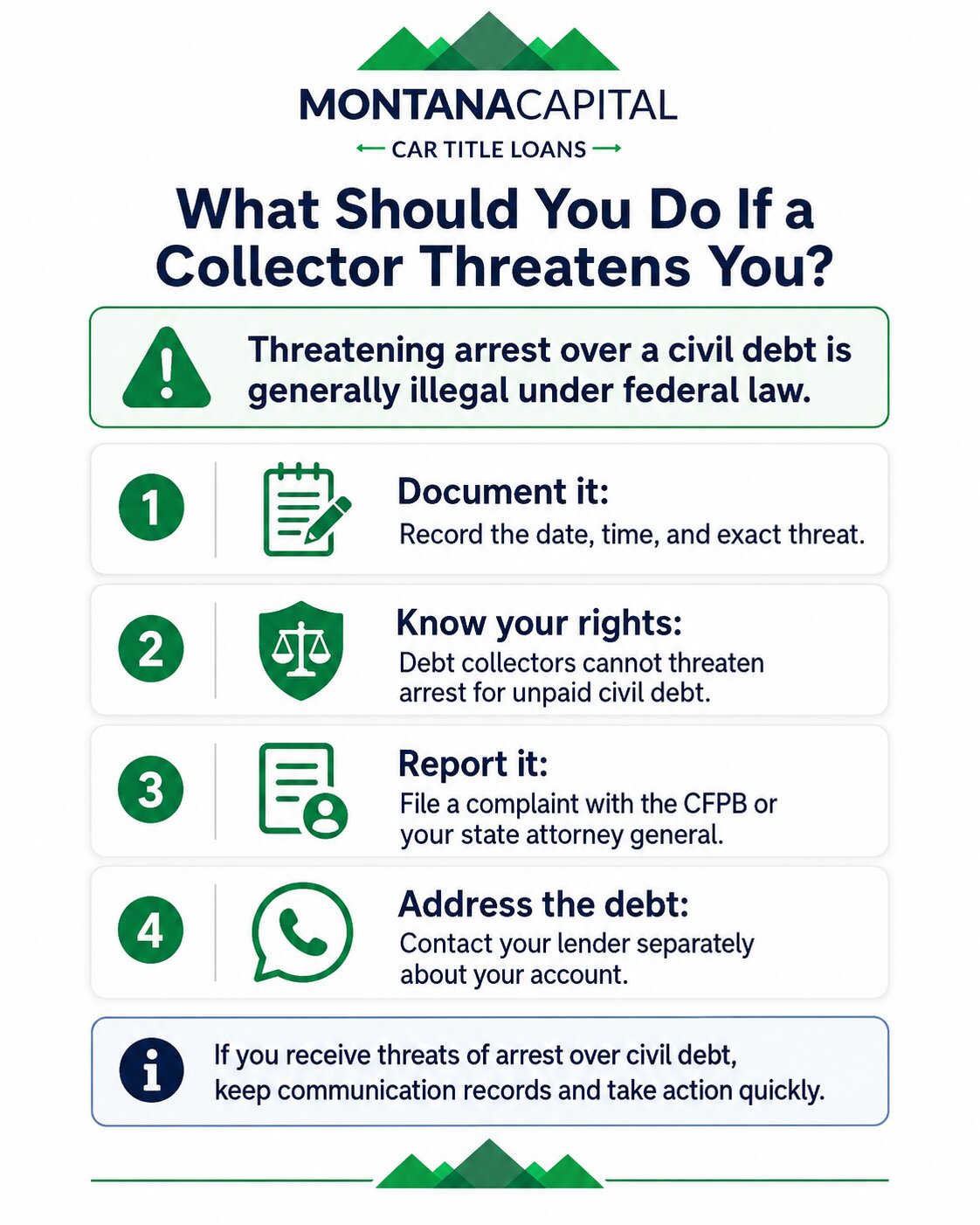
If a collector tells you that you will be arrested if you do not pay, that statement itself is a violation of federal law. You have the right to document it and report it.
Here is what to do:
- Document the call. Write down the date, time, and the exact words the collector used.
- Know that the threat is illegal. Threatening arrest over a civil debt violates the Fair Debt Collection Practices Act.
- File a complaint with the CFPB at consumerfinance.gov or with your state attorney general’s office.
- Contact your lender directly about your actual account, separately from reporting the illegal threat. The two issues are independent of each other.
Does Reporting the Threat Cancel Your Debt?
Reporting an illegal threat does not cancel your debt. The underlying obligation and the lender’s right to repossess the vehicle remain.
But the threat itself is a separate issue, and putting it on record matters, both for your own protection and because the CFPB uses complaint data to identify patterns of illegal conduct.
What Should You Do If You Can’t Pay Your Title Loan?
If you are struggling to make your title loan payments, don’t ignore the problem. Contacting us directly is a far more effective response than avoiding the calls.
- Repossession is a last resort for us, not a first move. Calling before you miss a payment, if possible, gives you the best chance of working out an arrangement that keeps your vehicle and your account in better standing.
- Know your rights throughout this process. Debt collectors cannot legally threaten you with arrest, and repossession must comply with applicable state laws.
- If your financial situation is more serious, speaking with a bankruptcy attorney may be worth considering. Chapter 13 bankruptcy, for example, can in some cases allow a borrower to reorganize secured debts and potentially protect a vehicle.
The Bottom Line
Missing a title loan payment can put your vehicle at risk of repossession and may leave you responsible for a remaining balance after the sale. Criminal consequences generally involve separate conduct, such as fraud or ignoring a court order.
If you’re worried about falling behind, call us at 1 888 508-5366 before it happens. We would rather have that conversation early than begin a repossession process that is harder on everyone.
Important: Title loans are expensive and intended for short-term financial needs only. They may involve high fees and interest rates and are not a long-term financial solution. Consider alternatives such as personal loans, credit union loans, or borrowing from family or friends before proceeding.
Frequently Asked Questions
Can a Debt Collector Threaten to Have Me Arrested?
No. Debt collectors cannot legally threaten you with arrest over an unpaid title loan. If this happens, document the interaction and report it to the Consumer Financial Protection Bureau (CFPB) or your state’s attorney general.
Can Hiding or Selling My Car During a Title Loan Lead to Criminal Charges?
Yes, in some cases. Selling, hiding, or transferring a vehicle used as collateral without the lender’s consent may result in allegations of fraud or theft under state law. This is different from simply missing your loan payments.
Can I Be Arrested for Ignoring a Lawsuit Over an Unpaid Title Loan?
In rare cases, yes. An arrest would result from ignoring a court order, not from the unpaid debt itself. Responding to lawsuits and court notices can help you avoid additional legal consequences.
Can I Be Arrested for Refusing to Hand Over My Car During Repossession?
Generally, no. Repossession agents must back off if you clearly object, but physically blocking or fighting the repossession can lead to separate charges like resisting or interfering. State your objection calmly and let them leave; the lender can still pursue repossession through the courts.
What Should I Do if I Can’t Afford My Title Loan Payments?
Contact your lender as soon as possible to discuss your options. If you receive a lawsuit or court notice, respond promptly, and consider speaking with a bankruptcy attorney if you’re facing serious financial hardship.