






Yes, you can include a title loan when you file for bankruptcy, but because it’s secured by your car, the loan isn’t simply erased the way many unsecured debts can be.
You’ll generally need to decide how the vehicle and the lender’s lien will be handled. A bankruptcy attorney can explain which option fits your situation.
Quick Facts
- Chapter 7 and Chapter 13 treat title loans differently.
- Bankruptcy generally pauses most collection activity, including many repossessions.
- Keeping the vehicle may require dealing with the lender’s secured claim through the bankruptcy process.
- Talk to a bankruptcy attorney before choosing how to handle the vehicle and loan.
This page covers what happens to a title loan you already have. If you’re asking whether you can get a new title loan while a bankruptcy case is open, that’s a different question. See our Chapter 13 title loan guide.
Editorial Disclosure: Montana Capital Car Title Loans® (NMLS ID 2249848) is a licensed direct lender. This content is informational only and does not offer legal or financial advice. Terms, APRs, and availability may vary by state and borrower qualifications.
Can You Include a Title Loan in Bankruptcy?
Yes. A title loan is a debt and should be disclosed in your bankruptcy filing. But because it’s secured by your vehicle, it’s handled differently from debts such as credit card balances or medical bills.
Many unsecured debts may be discharged in bankruptcy. A secured title loan is different because the lender’s lien on your car can survive the discharge, even if your personal obligation to repay some or all of the debt is discharged.
You’ll therefore need to address what happens to the vehicle as part of the bankruptcy process.
What Happens to a Title Loan in Chapter 7?
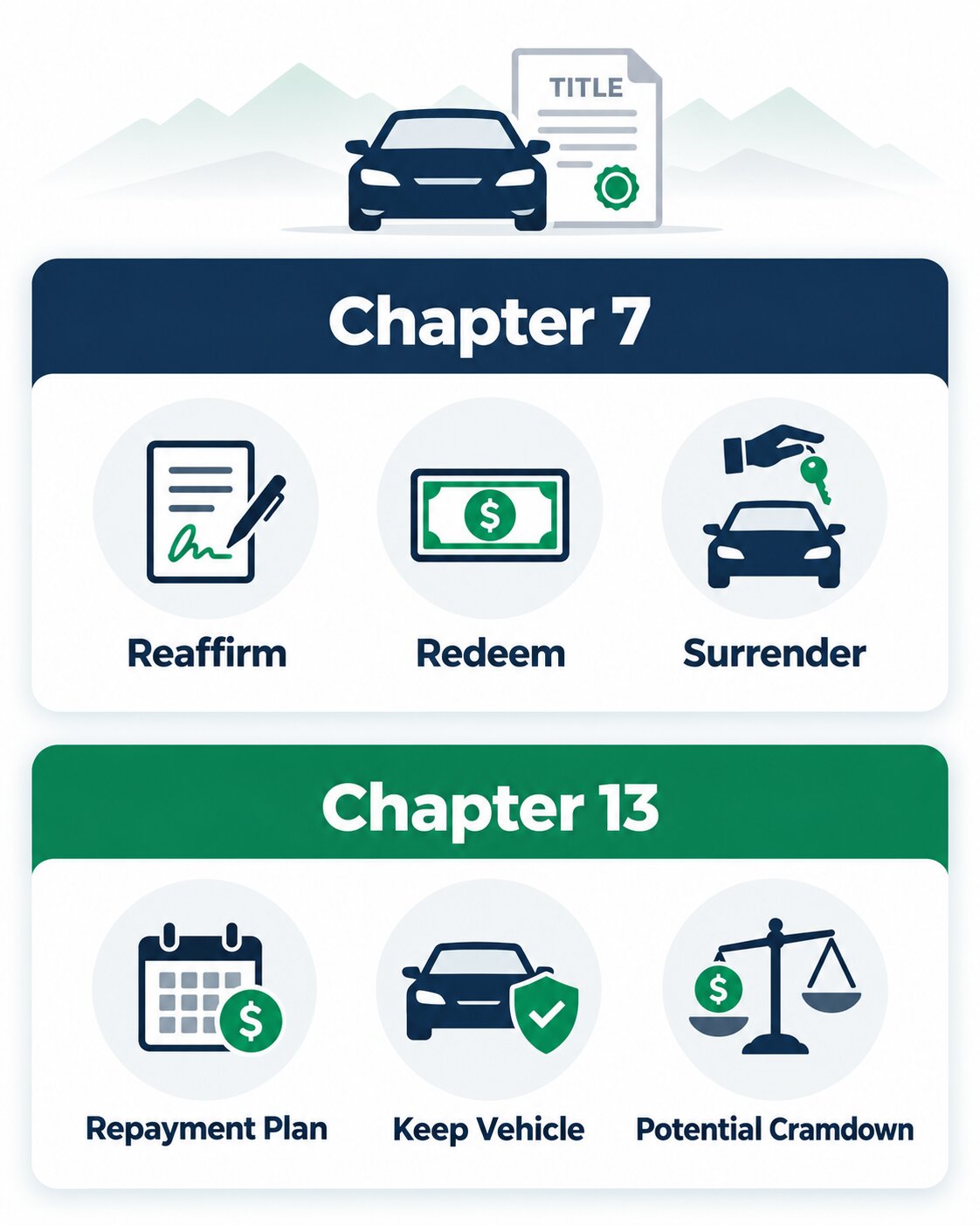
In Chapter 7, the main ways of dealing with an existing title loan are reaffirming the debt, redeeming the vehicle, or surrendering it.
Reaffirm
You enter into a reaffirmation agreement under which you remain personally responsible for the debt after bankruptcy. The agreement may keep the existing terms or include agreed changes.
If your budget cannot realistically support the payments, the court may decline to approve the agreement in cases where court approval is required.
Redeem
If the vehicle qualifies for redemption, you pay the lender’s secured claim in one lump sum. In simple terms, this is generally based on the value of the lender’s secured interest in the vehicle rather than automatically being the full outstanding loan balance.
Any remaining part of the debt that bankruptcy law allows to be discharged may then be eliminated through the bankruptcy.
Redemption usually requires cash or separate financing upfront, which can make it difficult for someone already facing financial problems.
Surrender
You give the vehicle to the lender. If there is money still owed after the vehicle is sold, your personal responsibility for that remaining debt may generally be discharged if bankruptcy law allows it.
The automatic stay generally pauses repossession after the bankruptcy petition is filed while these issues are dealt with, although there are exceptions and creditors can ask the court for permission to continue.
| Option | Keep the car? | What happens? |
|---|---|---|
| Reaffirm | Yes | You agree to remain responsible for the debt under a reaffirmation agreement |
| Redeem | Yes | You pay the qualifying secured amount in one lump sum |
| Surrender | No | You return the vehicle to the lender |
Redeeming may be worth discussing with an attorney when the vehicle is worth considerably less than the outstanding balance, but eligibility and valuation rules matter.
What Happens to a Title Loan in Chapter 13?
In Chapter 13, an existing title loan can usually be addressed through the court-approved repayment plan rather than requiring the immediate reaffirm-or-surrender decision associated with Chapter 7.
Chapter 13 plans normally run for three to five years. Secured debts can be treated through the plan, and if you want to keep the vehicle, the plan generally needs to provide appropriate treatment for the lender’s secured claim.
Depending on the plan and how the claim is treated, the interest rate may be different from the rate in the original title-loan agreement.
In some cases, the secured portion of a debt can also be reduced to the value of the vehicle, with the remaining amount treated as unsecured debt. This is commonly called a cramdown.
The 910 Day Rule
One point needs particular care. The Bankruptcy Code contains a restriction commonly called the 910-day rule for certain purchase-money vehicle loans incurred within 910 days before filing.
A typical title loan taken against a vehicle you already own is generally not a purchase-money loan because the title loan was not used to buy the vehicle.
Whether a particular title loan qualifies for cramdown still depends on the facts and legal classification of the debt, so confirm this with a bankruptcy attorney before relying on it.
If you complete the Chapter 13 plan, any remaining part of the title-loan debt that bankruptcy law allows to be discharged may be dealt with according to the terms of the confirmed plan.
Does Filing Bankruptcy Stop Repossession?
Outside bankruptcy, title loan repossession may occur after default. Filing bankruptcy changes the situation because an automatic stay generally takes effect when the bankruptcy petition is filed and stops most collection activity.
That protection is not absolute. A title lender can ask the bankruptcy court for relief from the automatic stay, which means permission to continue with repossession.
If your vehicle was already repossessed before you filed, getting it back isn’t automatic.
In City of Chicago v. Fulton (2021), the U.S. Supreme Court held that simply retaining property repossessed before the bankruptcy filing does not by itself violate the automatic stay.
You may need to seek the return of the vehicle through the bankruptcy process, and the outcome will depend on the facts of your case. This is an area where advice from a bankruptcy attorney is particularly important.
What Are the Risks of Reaffirming or Redeeming?
Reaffirming and redeeming can both allow you to keep the vehicle, but they work very differently.
Reaffirming’s Risk
The reaffirmed debt remains your personal legal obligation after the current bankruptcy. If you later default, the lender may be able to repossess the vehicle.
You may also still owe money if the vehicle sells for less than the remaining debt, depending on applicable law and the terms of the reaffirmation agreement.
Redeeming’s Risk
Redemption generally requires paying the lender’s qualifying secured amount in one lump sum. That can be difficult for someone who is already experiencing financial problems.
Surrendering avoids the need to fund either option but means giving up the vehicle.
Which route makes sense depends on the vehicle’s value, your budget, and the rest of your financial situation.
If you have a title loan with us and you’re considering bankruptcy, call us to talk through your account before you decide.
What Should You Do Before Deciding?
These decisions can have long-term consequences, so talk to a bankruptcy attorney before choosing how to deal with your title loan.
A reaffirmation agreement, redemption amount, or proposed Chapter 13 treatment is worth having reviewed before you commit to it.
If you haven’t filed yet, it may also be worth exploring your existing options first. Some borrowers may be able to discuss a hardship plan or refinance, and we’ve also covered other ways to get out of a title loan without losing your car.
Be fully transparent with your attorney about the title loan and the vehicle securing it.
We’re a title loan lender, not a law firm. Nothing on this page is legal advice, and a bankruptcy attorney is the right person to advise you on how bankruptcy law applies to your particular situation.
Questions to Ask a Bankruptcy Attorney About Your Title Loan
- Does my title loan qualify for different treatment under Chapter 13?
- What value will the court use for my vehicle if I want to redeem it?
- What happens if I reaffirm the debt and later cannot make the payments?
- Has the automatic stay taken effect in my case, and could the lender ask the court for permission to repossess?
- If I surrender the vehicle, could I still owe anything afterward?
FAQs
Do I Still Have to Make Title Loan Payments After Filing Bankruptcy?
Filing bankruptcy does not automatically mean you should stop making payments on a vehicle you want to keep.
How payments should be handled depends on the chapter you file, how the lender’s claim is treated, and the instructions in your bankruptcy case. Ask your attorney what you should pay and when before changing anything.
What if I’m Current on My Title Loan Payments When I File?
Being current on the loan does not remove the lender’s lien or change the fact that the debt is secured by your vehicle.
You still need to disclose the title loan in your bankruptcy filing, and the way the vehicle is handled will depend on the bankruptcy chapter and treatment of the secured debt.
Can I Change My Mind After Reaffirming a Title Loan?
Possibly, but there is a limited deadline.
Federal bankruptcy law generally allows a reaffirmation agreement to be canceled before discharge or within 60 days after the agreement is filed with the court, whichever is later.
If you’re reconsidering a reaffirmation agreement, speak to your bankruptcy attorney as soon as possible.
What Happens if My Car Has Already Been Repossessed?
Filing bankruptcy after repossession does not automatically return the vehicle to you.
Depending on the timing and circumstances, you may need to seek its return through the bankruptcy process. If the vehicle has already been repossessed, contact your bankruptcy attorney quickly because timing can matter.
Can I Get Another Title Loan After Bankruptcy?
Potentially. A previous bankruptcy does not automatically prevent you from applying for a title loan once the bankruptcy is no longer active.
You would still need to meet our current eligibility requirements, including the review of your vehicle and your ability to repay.
If your bankruptcy case is still open, see our guide to title loans during Chapter 13 for more information.
What Happens to the Car Title After Bankruptcy?
If the lender’s secured claim is satisfied and the lien is released, the title can eventually be cleared of that lien. If the lien survives the bankruptcy, the lender may retain rights against the vehicle even if your personal obligation for some of the debt has been discharged.
Ask your attorney or lender what needs to happen before expecting the lien to be released.
The Bottom Line
A title loan does not simply disappear when you file bankruptcy because the lender may retain rights against the vehicle securing it.
Chapter 7 and 13 provide different ways of dealing with secured debts, and the right approach depends on your circumstances.
Talk to a bankruptcy attorney before making a decision, and call us if you’d like to discuss your account directly.
Resources
For further information on the federal bankruptcy rules discussed in this article: