






A loan for moving expenses isn’t one specific type of loan. It simply means borrowing money to cover some or all of the cost of relocating.
Depending on your situation, you might use a personal loan, existing credit, help from an employer or local program, or a secured option such as a car title loan. If you have savings or money due back from a previous rental, that can also reduce how much you need to borrow.
Bad credit can narrow your choices, but it doesn’t leave you with only one option. The important thing is to price the move first, see what you can cover yourself, then compare the cost and repayment terms of any financing you still need.
At a Glance
✓ A moving loan isn’t a separate financial product. Several types of borrowing can be used to cover relocation costs.
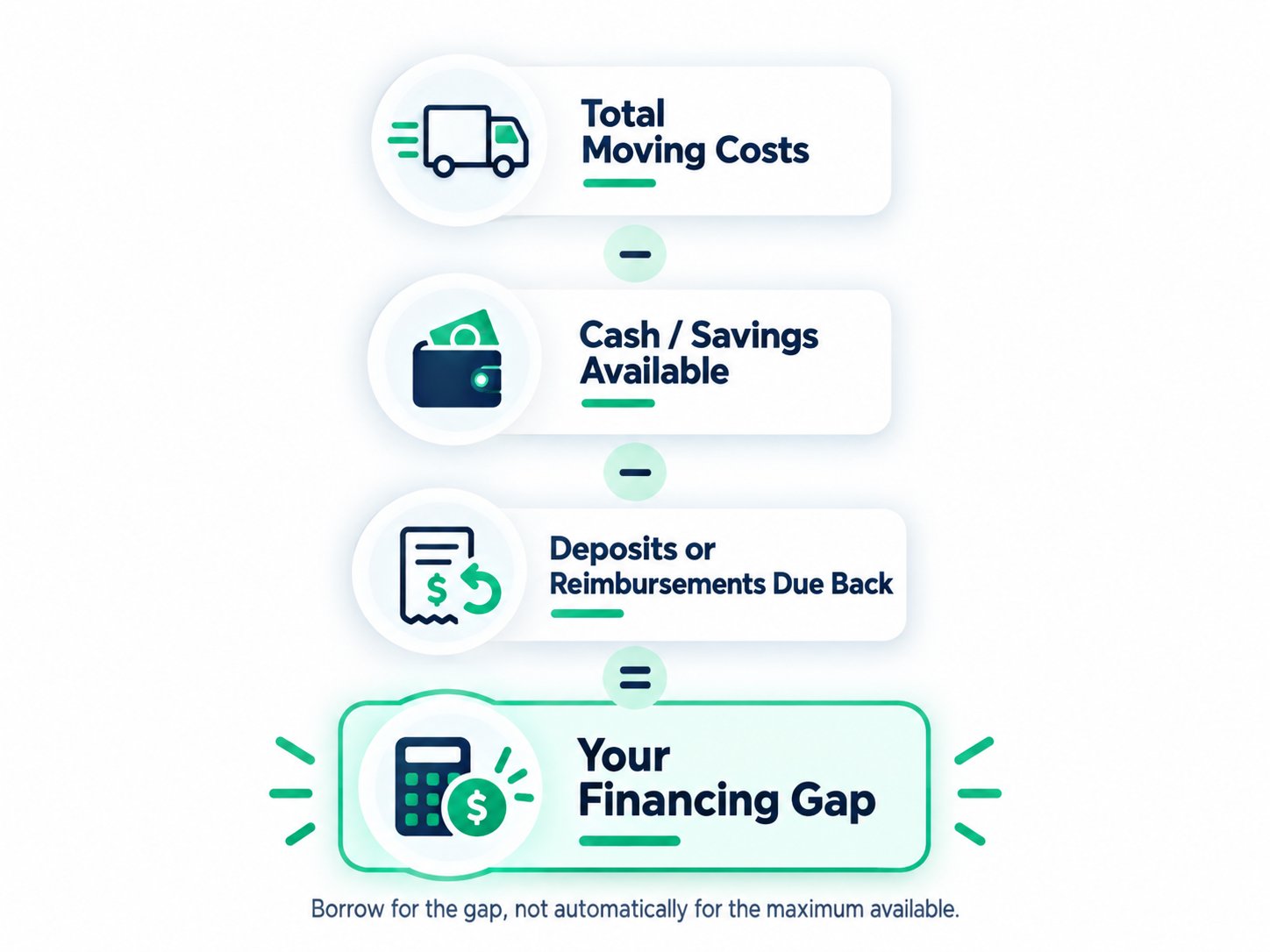
✓ Before borrowing, work out the gap between what the move will cost and the money you already have available.
✓ Personal loans or existing credit may cost less if you qualify, while employer or local assistance may reduce the amount you need to borrow.
✓ If bad credit limits unsecured borrowing, and you own a vehicle with enough equity, a car title loan is another option to compare.
✓ Loan amounts and rules can vary considerably by state, particularly with title loans.
✓ Compare the total repayment and what happens if you miss a payment, not just how much you can borrow.
Editorial Disclosure: Montana Capital Car Title Loans® (NMLS ID 2249848) is a licensed direct lender. This content is informational only and does not offer legal or financial advice. Terms, APRs, and availability may vary by state and borrower qualifications.
What Can a Loan for Moving Expenses Cover?

Moving costs can add up quickly, particularly when several expenses fall due before your next paycheck or before you get a deposit back from your previous home.
Depending on the type of financing you use, a loan for moving expenses could cover:
- Moving company or truck rental fees
- Security deposits and first month’s rent
- Utility deposits and connection fees
- Packing materials and storage
- Fuel and travel expenses
- Temporary lodging
- Cleaning costs
- Unexpected expenses during the move
Ways to Cover Moving Costs
There isn’t one borrowing option that works best for every move. Start with the lowest-cost help you can realistically access, particularly if your moving date gives you time to compare.
Personal Loans
A personal loan is usually unsecured, which means you don’t put your vehicle or another asset up to secure the debt.
Banks, credit unions, and online lenders typically look at your credit history, income, and other financial information when deciding whether to approve an application and what rate to offer.
If you qualify for a competitive rate, compare the APR, monthly payment, and total repayment with a title loan before deciding.
Our guide to personal loans for bad credit looks at some of the options available when your credit history makes borrowing more difficult.
Credit Cards
An existing credit card can be useful for smaller moving expenses such as fuel, packing supplies, or temporary accommodation.
The question is how long you’ll carry the balance. Interest can make the move more expensive if you’re still paying it off long after you’ve relocated.
Using a large part of your available credit can also leave less room for an unexpected expense after the move.
Employer and Local Assistance
If you’re moving for work, check whether your employer offers relocation help or reimburses certain expenses. Local housing or community programs may also help in some circumstances.
Even partial assistance can reduce the amount you need to finance.
Car Title Loans
If unsecured borrowing isn’t available and you own a vehicle with enough equity, a title loan is another option to compare.
Because title loans are the type of lending we provide, we’ll go into more detail on them next.
When a Title Loan May Be an Option for Moving Costs
A car title loan is a secured loan. Your vehicle backs the money you borrow, while you continue driving it during repayment.
We review your vehicle’s market value alongside your ability to repay, which means whether your income and financial commitments show that you can realistically afford the payments.
We do not run a credit check for pre-approval. If you decide to move forward with a loan, we may review credit reports from TransUnion, Equifax, LexisNexis, or FactorTrust as part of final approval.
Credit is not the main approval factor; we focus primarily on your verifiable income and vehicle equity. Applicants with bad credit are welcome to apply.
If you want more details on the process before deciding whether it’s something you want to consider, our guide explains how title loans work.
The main risk is also important to understand. Your car secures the loan, so if you don’t repay, you could lose your vehicle.
Approved applications can also move quickly:
- Apply. Share your details, income, and vehicle information online or by phone. This step takes about 5 minutes and lets you see whether you’re pre-approved.⁷
- Review your offer. Your offer spells out the APR, fees, term, and payment according to your state’s law. Upload your ID, proof of income, title, and photos of the car.
- Sign and get funded. Review the contract, make sure you can afford the payments, and sign if you want to proceed. Applications approved before 2:00 PM PT on business days may be funded on the same business day.⁷
- Repay and get your title back. Keep driving your car while you make your payments as agreed. Once the loan is paid in full, your title is returned to you.
Many vehicle inspections can be completed online, depending on the car’s condition, history, and eligibility. Some applicants still need a location visit because of state law or their individual circumstances.
What It Could Cost
A local move may only leave a smaller gap to cover, such as a truck rental or deposit. A long-distance move can involve movers, storage, travel, and temporary accommodation, so the amount needed may be much higher.
Work out that gap first rather than starting with the maximum amount you could borrow.
How much is available through a title loan also depends on where you live. In Tennessee, title loans secured by a single vehicle are capped at $2,500, and Virginia also limits motor vehicle title loans to $2,500. California allows larger loans of up to $50,000.
For moving expenses, that difference matters. A smaller loan might cover a truck rental, storage bill, or deposit, while a larger qualifying loan could cover more of the cost of a long-distance move.
APR varies by state and loan amount and can be as high as 175% where permitted. Loan terms can run up to 36 months, and where state law allows, a $75 processing fee and $15 title registration fee may also apply. There is no prepayment penalty.
Run your own numbers with our title loan calculator before you apply.
What You’ll Need to Apply for a Title Loan
- A lien-free title in your name, or one that’s nearly paid off
- A government-issued photo ID, and you’ll need to be 18 or older
- Proof of income
- Proof you live in a state we serve
- Interior and exterior photos of the vehicle for inspection
- Proof of insurance for loans over $5,000, and sometimes for smaller loans, depending on the vehicle’s condition
Stretching Your Moving Budget Further
Borrowing isn’t the only way to close a moving-cost gap.
Even if you still need financing, reducing the amount you borrow can lower the payment and the overall cost.
Some things worth checking include:
- Ask about employer relocation assistance. If you’re moving for a new job, your employer may offer a relocation allowance or reimburse certain moving costs.
- Check with your credit union. If you’re already a member, see what borrowing options are available before choosing another type of financing.
- Look into local assistance. Community organizations and housing programs may sometimes provide support with relocation or housing-transition expenses.
- Use savings for part of the move. Covering even one or two expenses yourself reduces the amount you need to finance.
- Get quotes before borrowing. Price the truck, movers, storage, travel, and deposits so you’re borrowing against an actual budget rather than an estimate.
It’s also worth thinking about what happens immediately after the move.
You may have a new rent or mortgage payment, different utility costs, a longer commute, or other expenses that weren’t part of your previous monthly budget.
The loan payment needs to fit alongside those costs, not just the expenses you’re dealing with today.
Before You Borrow for a Move
Start with the actual gap between what the move will cost and the money you already have available.
If you need $1,500 to complete the move, borrowing considerably more simply because it’s available means taking on debt you didn’t need.
Then compare the options on the same basis:
- APR
- Fees
- Monthly or scheduled payment
- Loan term
- Total amount repaid
- What happens if you miss a payment
- Whether an asset secures the debt
That gives you a clearer picture than comparing loan amounts alone.
You should also consider whether the payment will remain affordable after you’ve settled into your new home. Being able to make the first payment isn’t enough if the following months leave your budget too tight.
This is particularly important with a title loan because your vehicle secures the debt.
Frequently Asked Questions
How Much Should I Borrow for Moving Expenses?
Start with the actual cost of the move, then subtract any savings, reimbursements, or deposits you expect to receive back.
If you still have a shortfall, borrow for that gap rather than automatically taking the maximum amount available.
I’m Moving to Another State. Can I Still Get a Title Loan?
Possibly, but eligibility and loan rules vary by state.
We currently offer title loans in select states, so where you live and when you apply can affect the options available.
If you’re moving across state lines, see our guide to getting a title loan in a different state before applying.
Can I Get Another Title Loan for a Move If I Already Have One?
Not on the same vehicle. A lender typically won’t issue a second loan against a car that already has an existing lien, since that collateral is already tied up.
If you own a second vehicle with a clear title, you may be able to get a separate loan against that one, subject to approval and your state’s rules. Keep in mind that each loan carries its own repayment and repossession risk.
Can I Get a Title Loan for Moving Expenses If I’m Self-Employed?
Yes. Approval is based mainly on verifiable income and your vehicle’s equity, not how that income is earned, so self-employment on its own isn’t a barrier.
Can I Get a Title Loan for Moving Costs If My Car Isn’t Fully Paid Off?
Yes, as long as the title is lien-free or nearly paid off. If there’s still a balance on the car, the loan amount would be based on your equity, the value above what you still owe, rather than the car’s full value.
Can I Use a Moving Loan for Storage Costs?
Yes. Since a moving loan is generally financing used to cover relocation expenses rather than a restricted-use product, the funds can be used for storage costs as part of your move. This could include short-term storage between homes or a storage unit while you get settled.
Your Next Move
Work out what the move will actually cost first, then compare the borrowing options available to you based on APR, payments, total cost, and risk.
If bad credit has limited your unsecured borrowing options and you own a qualifying vehicle, apply online to see if you’re pre-approved.